— Selected work · twenty-four documents
Every service has a finished document you can open right now.
Nothing behind a form, nothing behind an email address. Each one is page for page what a paying client receives — not a mock-up, not a first chapter, not a sample with the good bits taken out.
The businesses are invented. Every document says so on its own cover. A practice this new that named real clients would be lying, and I'd rather show you the work than a logo wall.
The thinking, the writing and the evidence method are exactly what a client gets — including the marked gaps where a figure isn't known, left in rather than invented.
Start with these three
The full story behind the documentWOBBLE
A drink with a silly name and five colours that all shout. The whole identity decided in three weeks — including the rule that keeps it from becoming a bouncy castle.
Read the case study → Ongoing · €795–1,495/moRennet & Rind
A deliverable that arrives and compounds every month. What arrives on the last Thursday of every month, and why the newsletter is the part that actually sells cheese.
Read the case study → Website + conversion audit · €395Stillwater
A clinic losing bookings at nine on a Sunday evening. Twelve fixes ranked, two pages rewritten — and the four numbers that turn an opinion into a measurement.
Read the case study →Diagnose
What's wrong, and what to do about it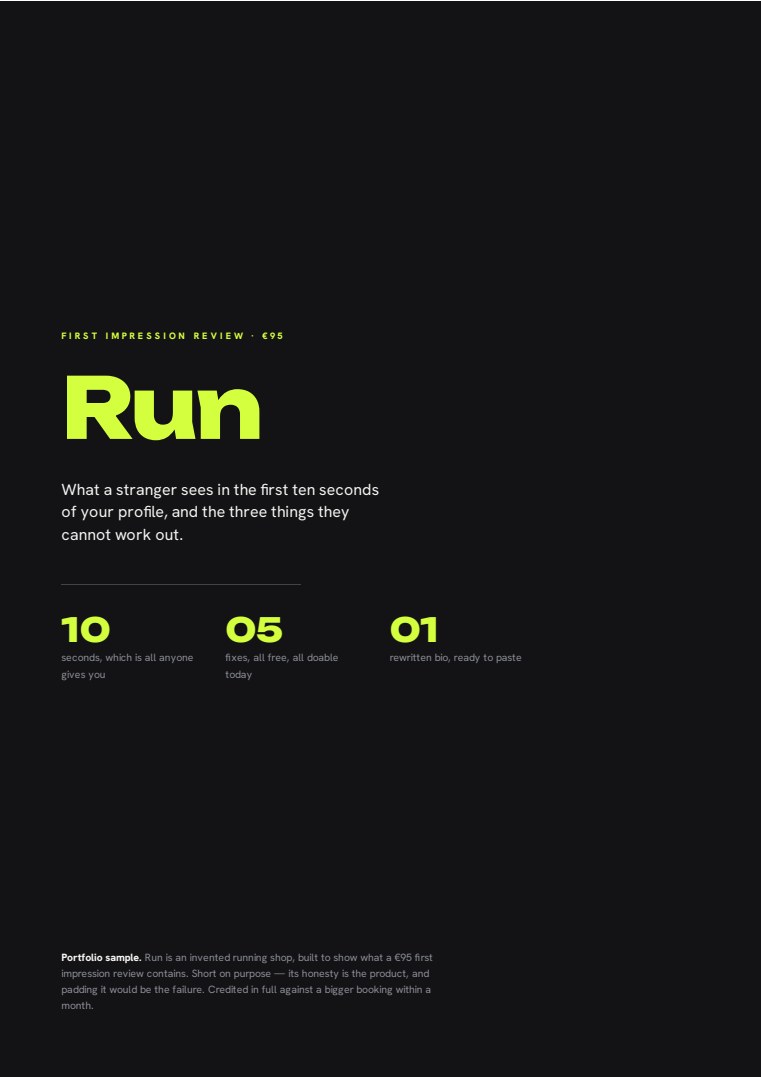
Run
Three pages, deliberately. What a stranger sees in ten seconds, the three things they cannot work out, five free fixes in order, and the bio rewritten with a note on what was cut and why.
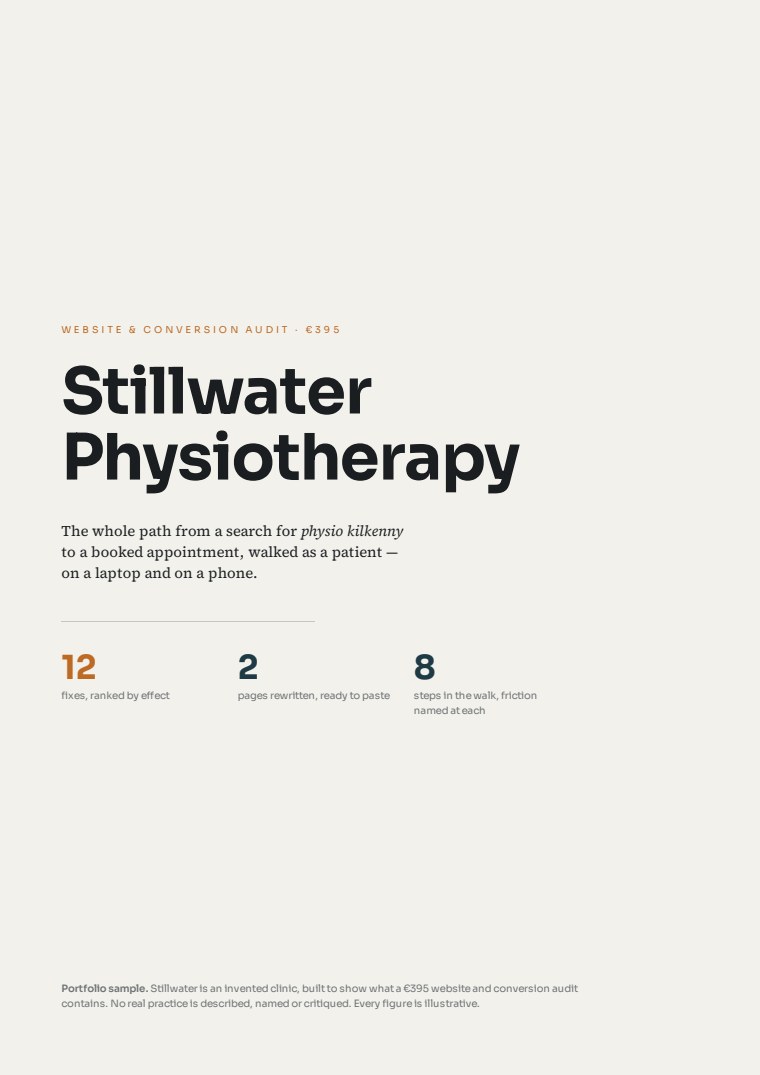
Stillwater
Ten pages: the path from search to booking walked as a patient on a laptop and a phone, friction named at all eight steps, twelve fixes ranked by effect with what each one costs them, load measured, and the two pages that matter rewritten ready to paste.
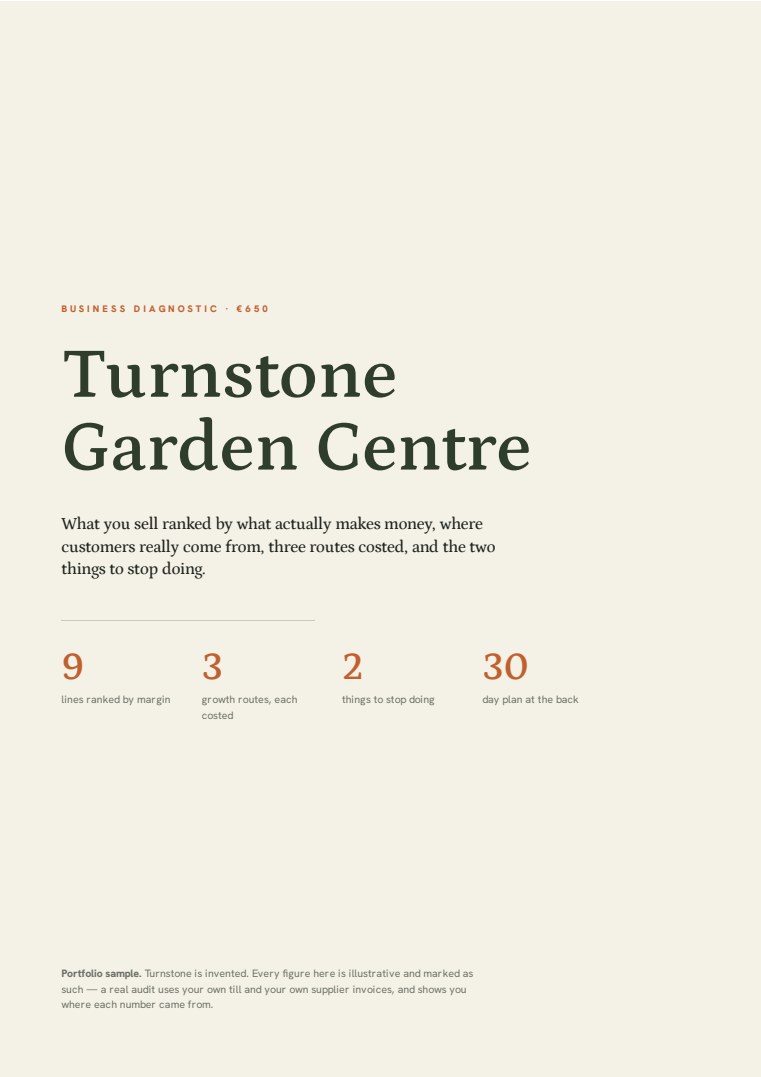
Turnstone
Eight pages. Nine lines ranked by what they actually earn rather than what they turn over, where customers really come from against where they think, three routes each with its assumption stated, and the two things to stop.
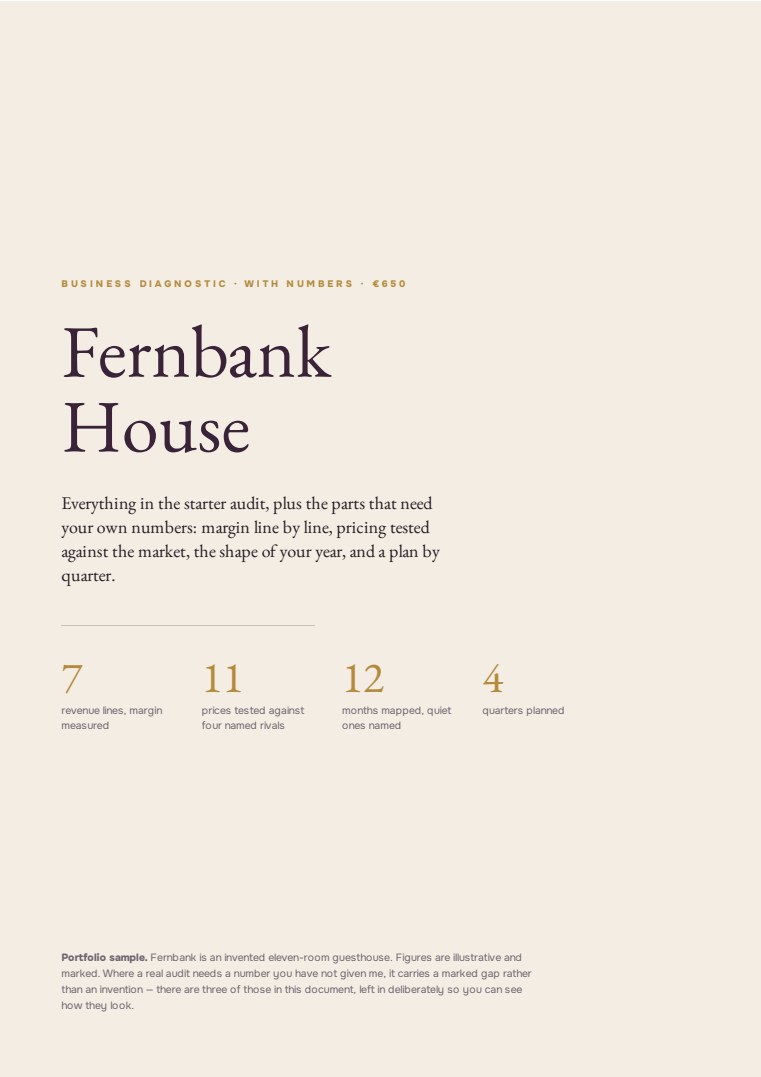
Fernbank
Ten pages. Margin line by line, eleven prices tested against four named rivals, the seasonal shape drawn out, a plan by quarter — and three marked gaps where a figure is not known, left in rather than invented.
Brand
Who you are, and how that looks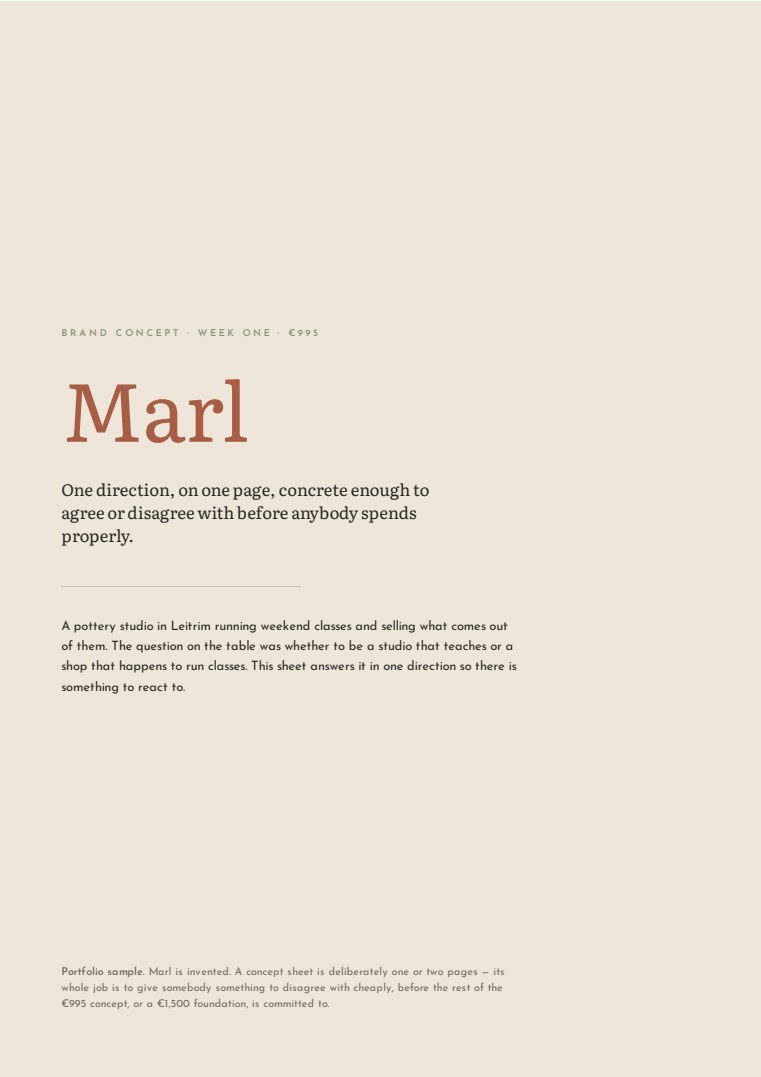
Marl
Two pages. One direction — a studio that teaches and sells the evidence — with the mood, palette, type, the name line, one idea, and the risk of that direction stated so it can be disagreed with cheaply.
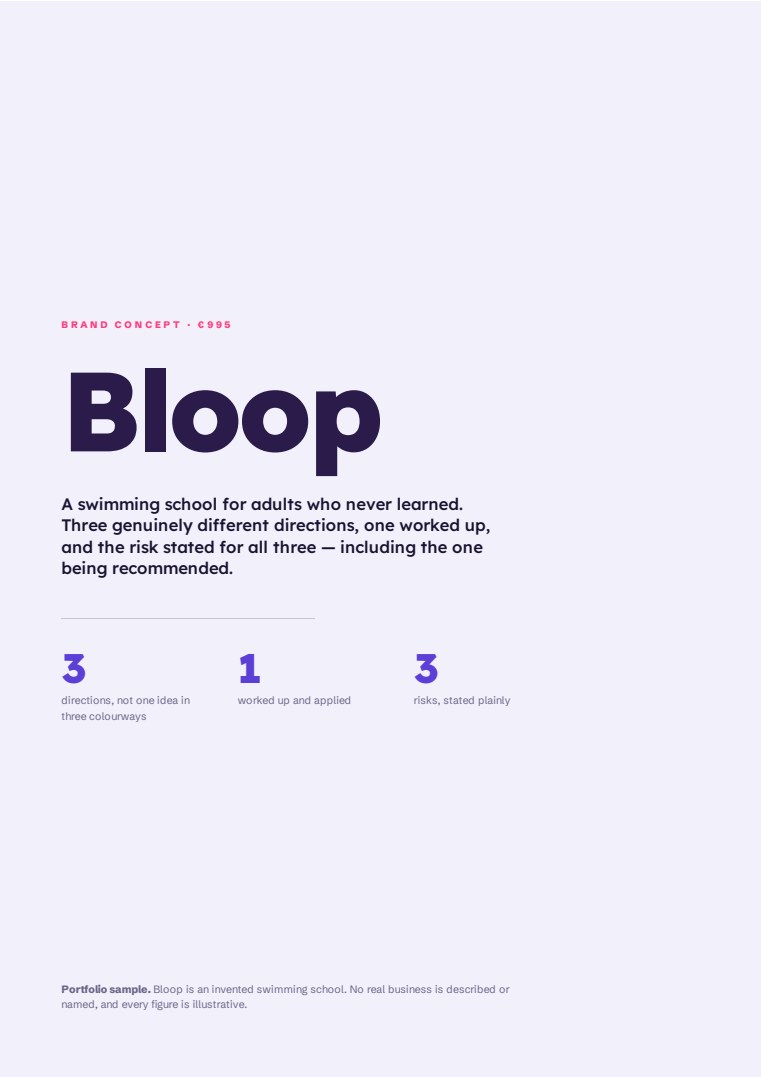
Bloop
Nine pages. Three genuinely different arguments with the risk stated for all three including the recommended one, one worked up in full, and an idea a leisure centre structurally cannot copy: week one, nobody swims.
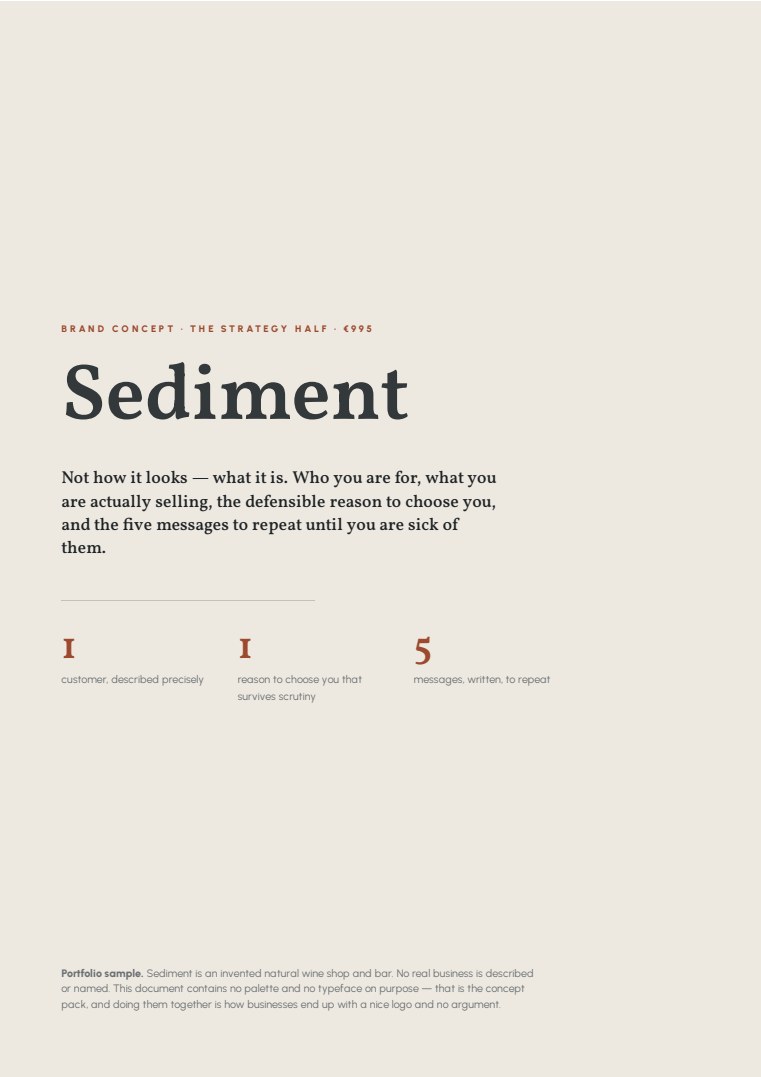
Sediment
Nine pages with no palette and no typeface in them, on purpose. One customer described precisely, what is actually being sold, the position tested against whether a rival could copy it, the words to stop using, and five messages written out.
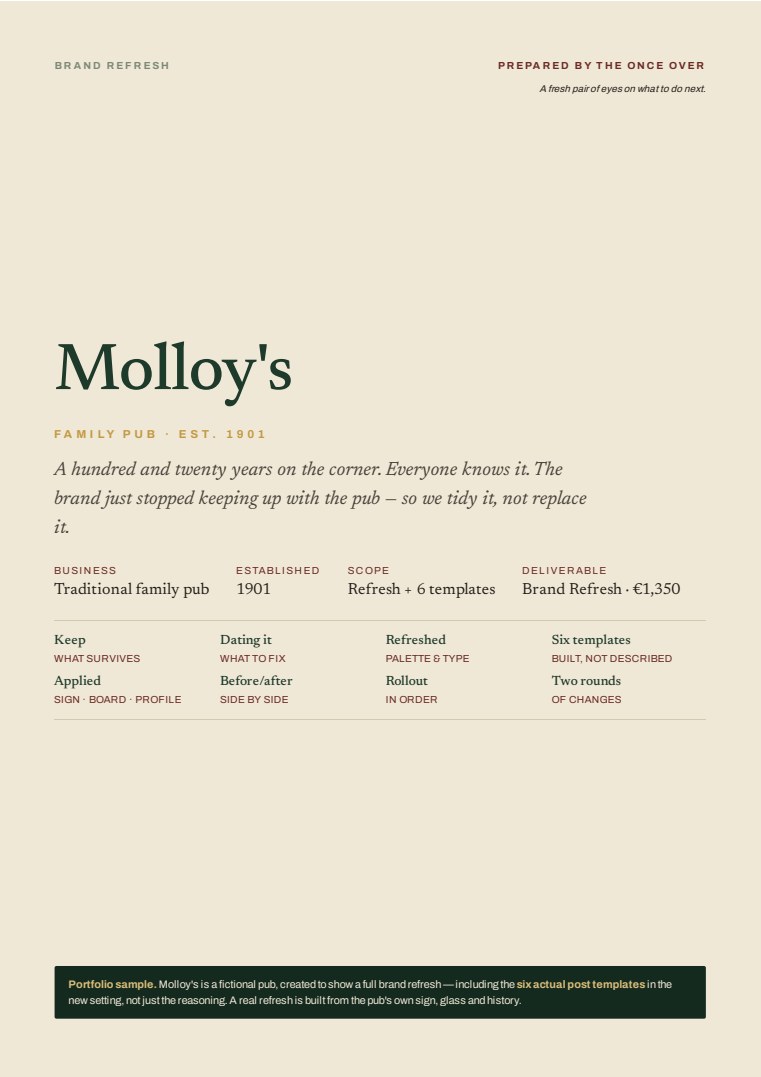
Molloy's
Keep what customers recognise, fix what dates it. The new shown against the old, applied everywhere they're seen, with a rollout order that costs least.
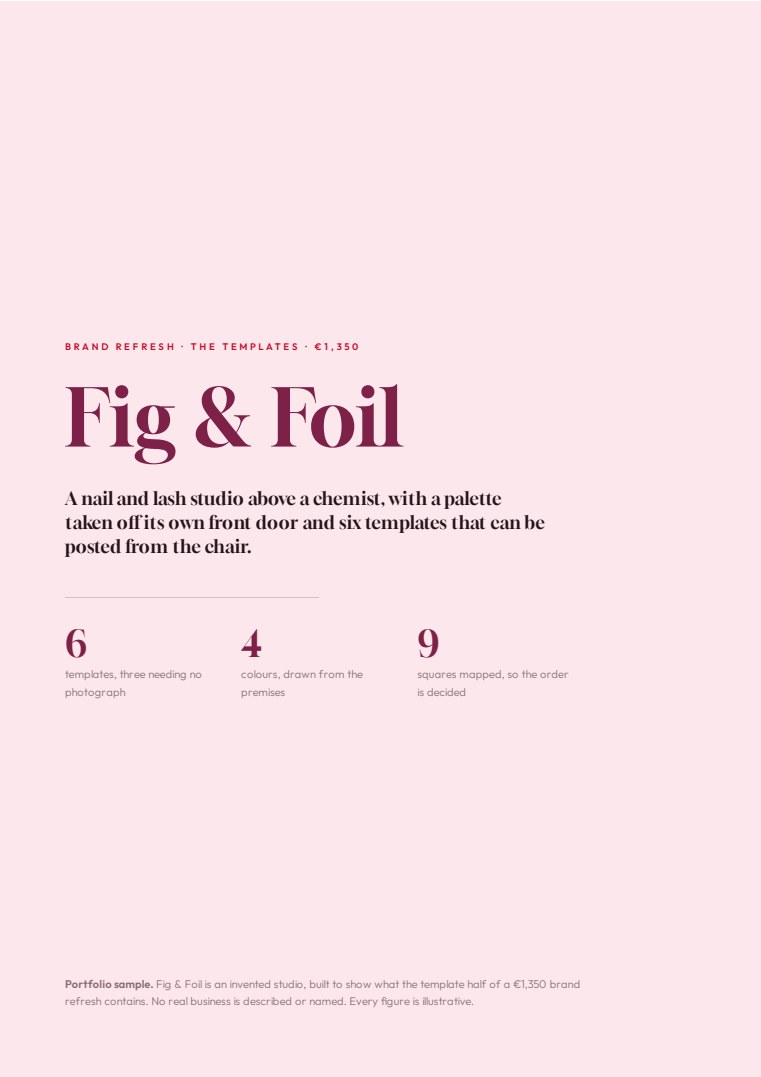
Fig & Foil
Ten pages: a palette taken off the studio's own front door, two typefaces with sizes and contrast decided, six templates drawn out with the full build spec, a nine-square grid map, and a shade-of-the-fortnight nobody can copy in a season.
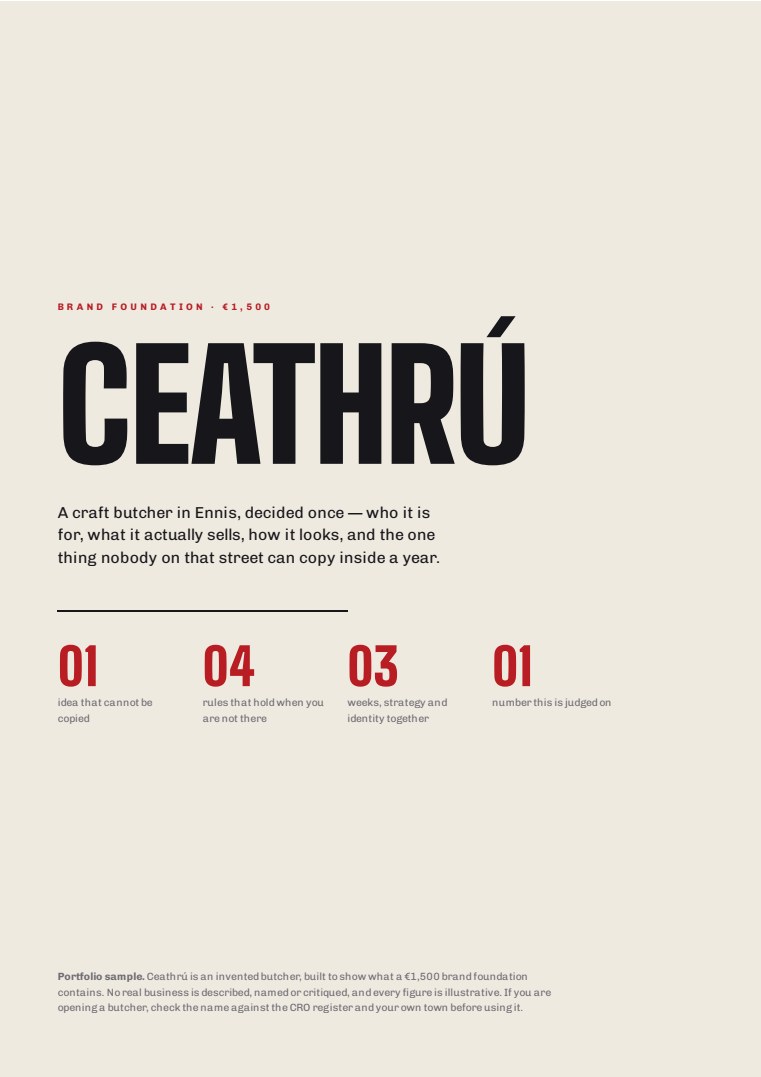
Ceathrú
Fourteen pages. Three butchers on one street all calling themselves traditional, so the answer was a position rather than a sign: one cut a week, named, priced, with a card telling you how to cook it. Name, palette, type, four rules, a costed production list and the one number it is judged on.
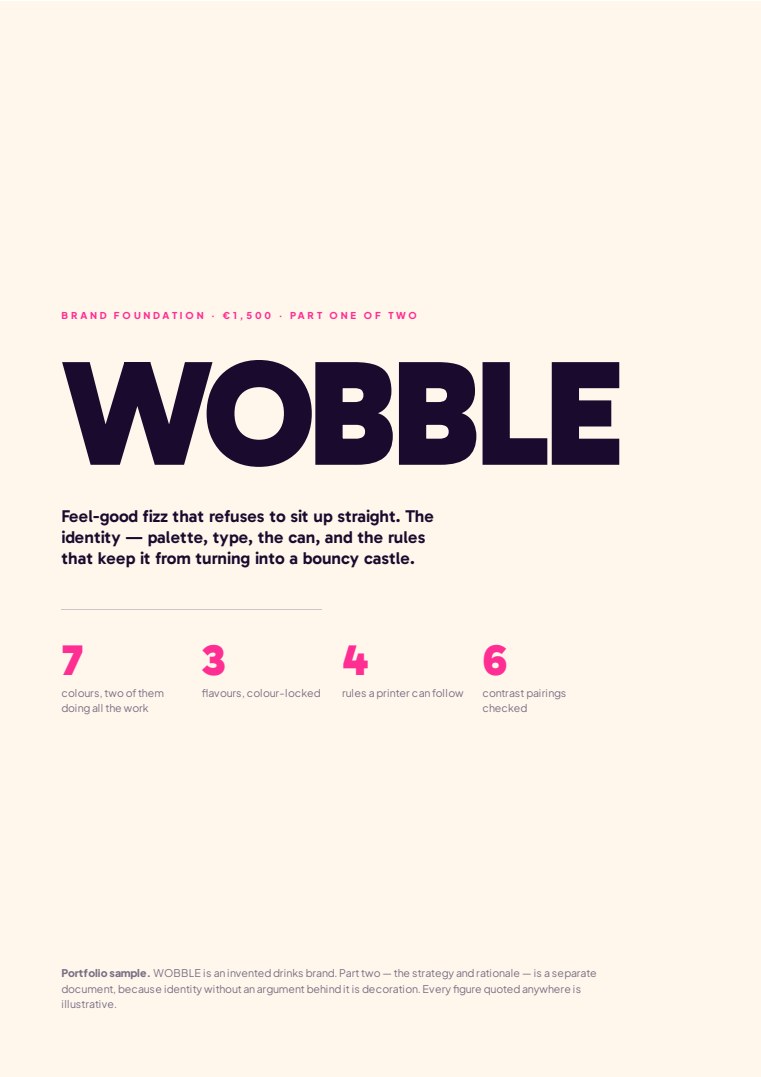
WOBBLE
Nine pages, part one of a brand foundation. Seven colours with every pairing contrast-checked, two typefaces with the sizes decided, three cans colour-locked, and four rules a printer can follow — including which two colours must run as spots or the whole brand goes grey.
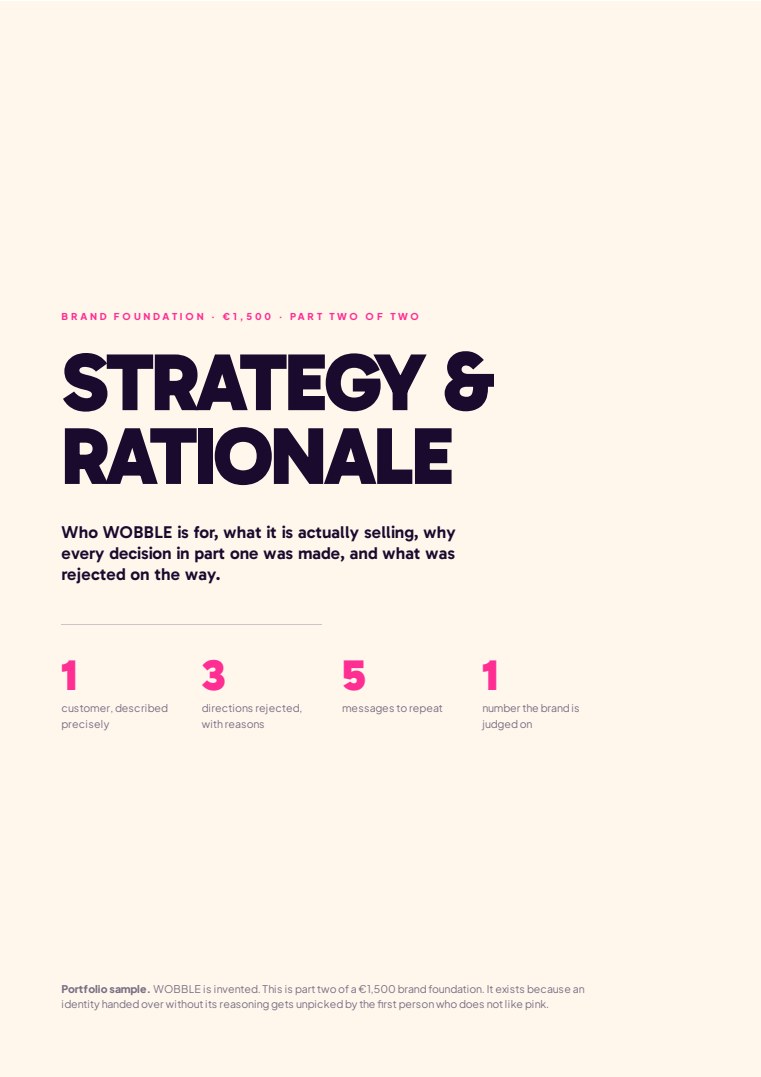
WOBBLE — strategy
Nine pages. Twenty-two rival cans counted, the customer described precisely, three directions rejected with reasons, the economics with a marked gap where the repeat-purchase figure is not known, and what the identity cannot fix.
Content
What you sell, what you say, and the photographs to take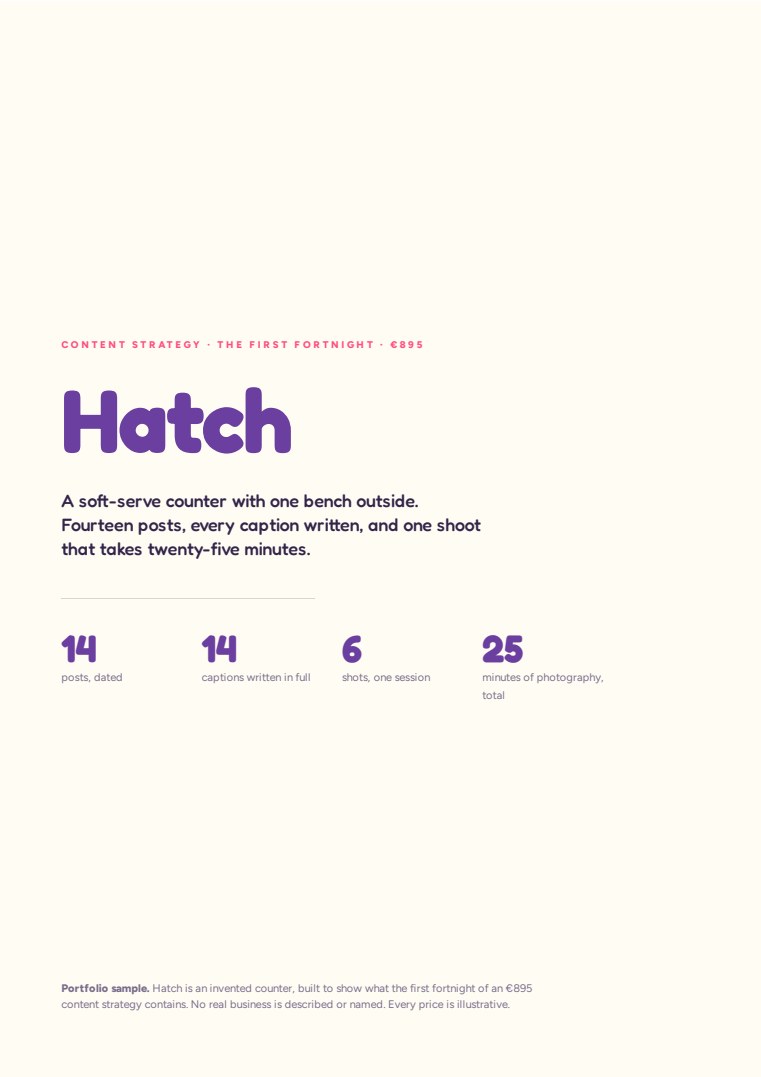
Hatch
Eight pages: fourteen posts by date with every caption written in full, a bright pastel system with the contrast checked, one twenty-five-minute shoot, and a Friday-at-four flavour that gives them a reason to post every week.
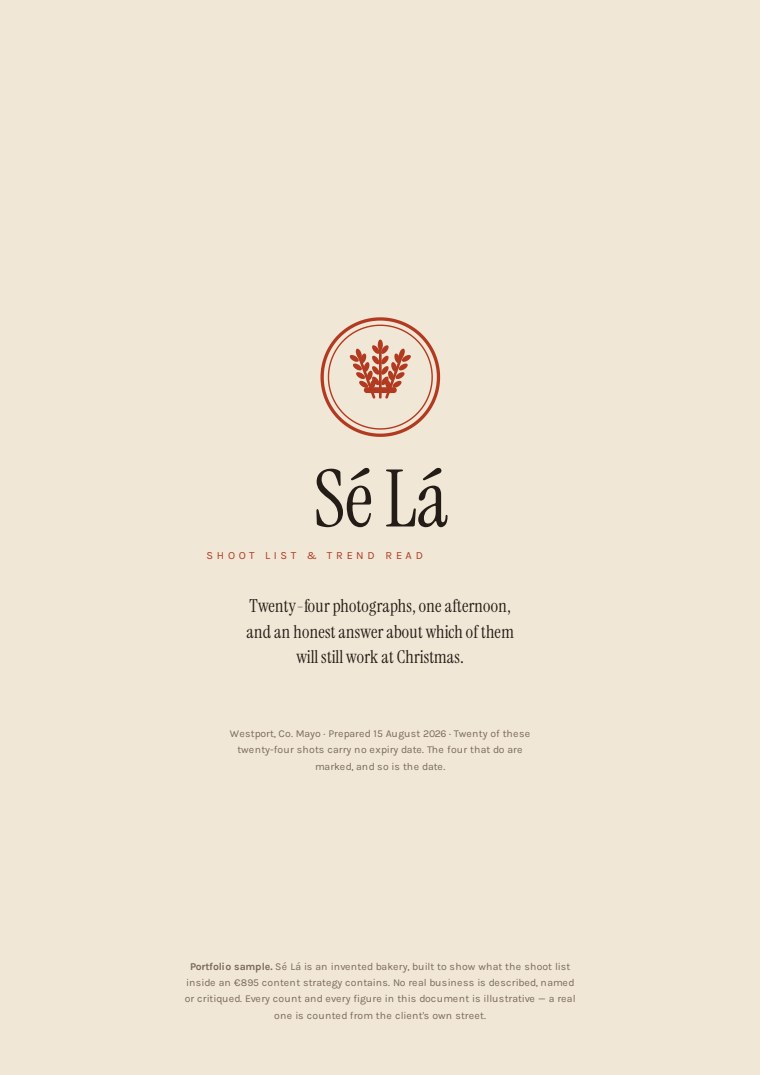
Sé Lá
Fourteen pages. Ten formats counted across the eleven businesses on the same street, three of them borrowed from fragrance, city coffee and confectionery because they are exhausted there and unseen here, and twenty-four shots in one afternoon — twenty of which carry no expiry date at all.
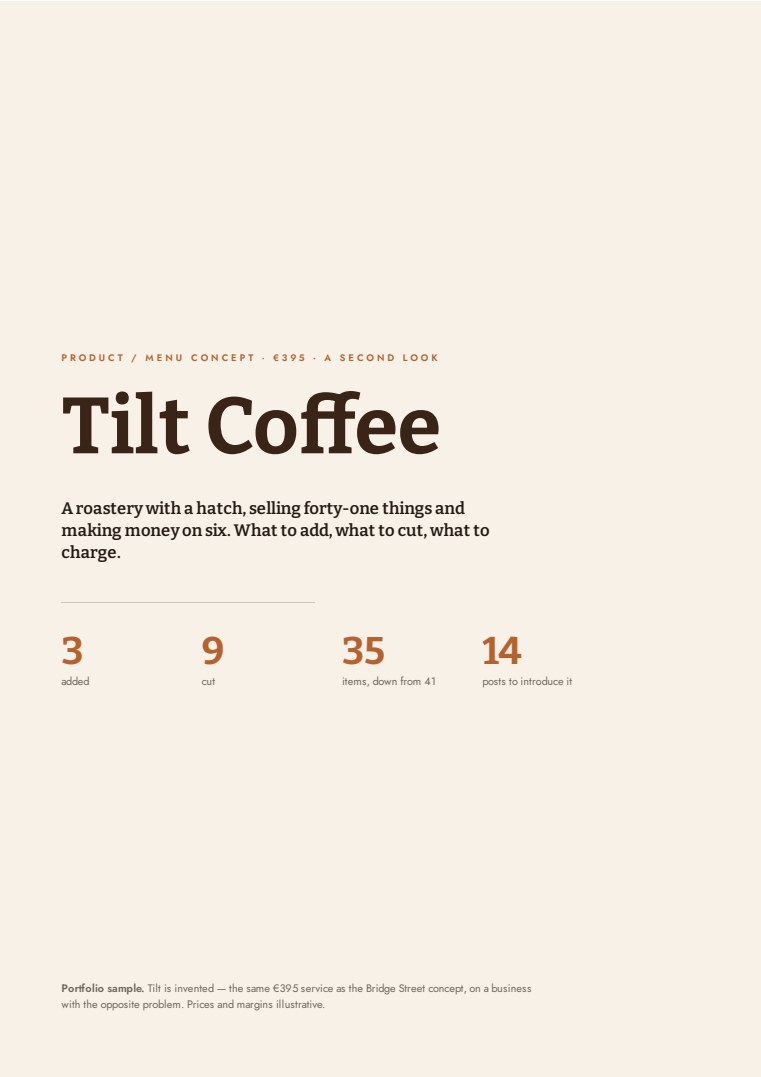
Tilt Coffee
Seven pages. Forty-one items down to thirty-five with six of them visible, a board that is two-thirds about beans, and one sentence for staff to say at the handover that is the cheapest experiment in the document.
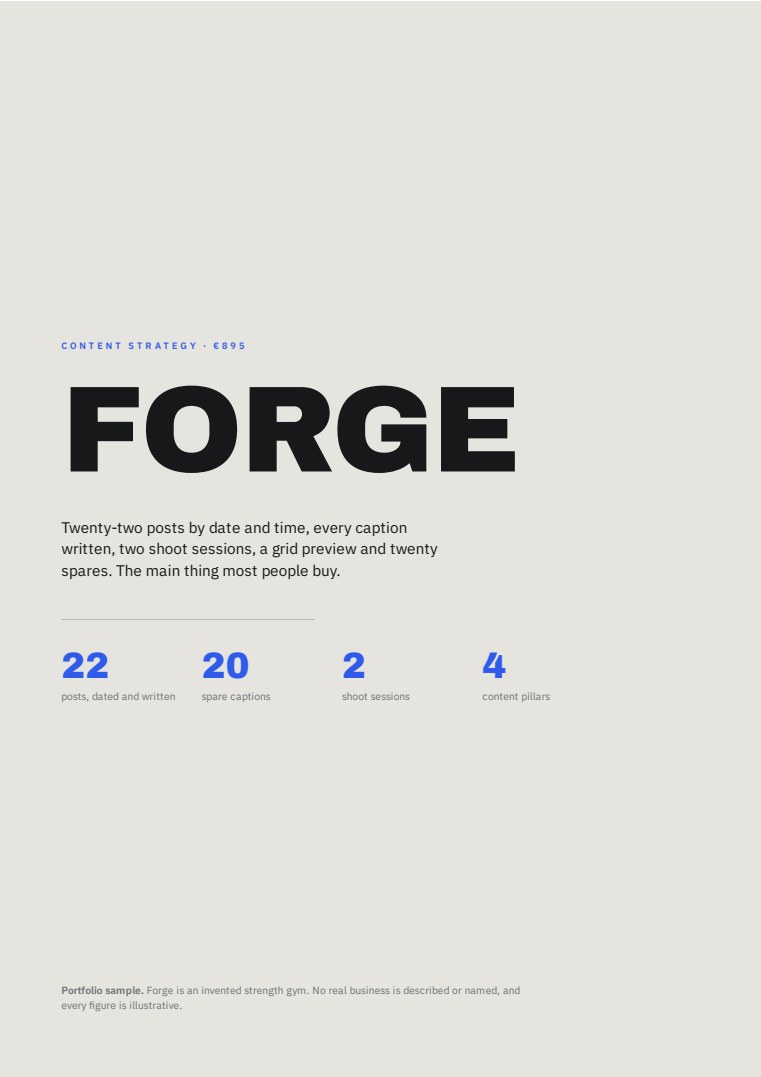
Forge
Ten pages. Twenty-two posts by date and time with every caption written, four pillars, a grid preview with the reasoning, a dated competitor snapshot, a two-session shot list and twenty spares — and eight of the posts aimed at people who have already paid.
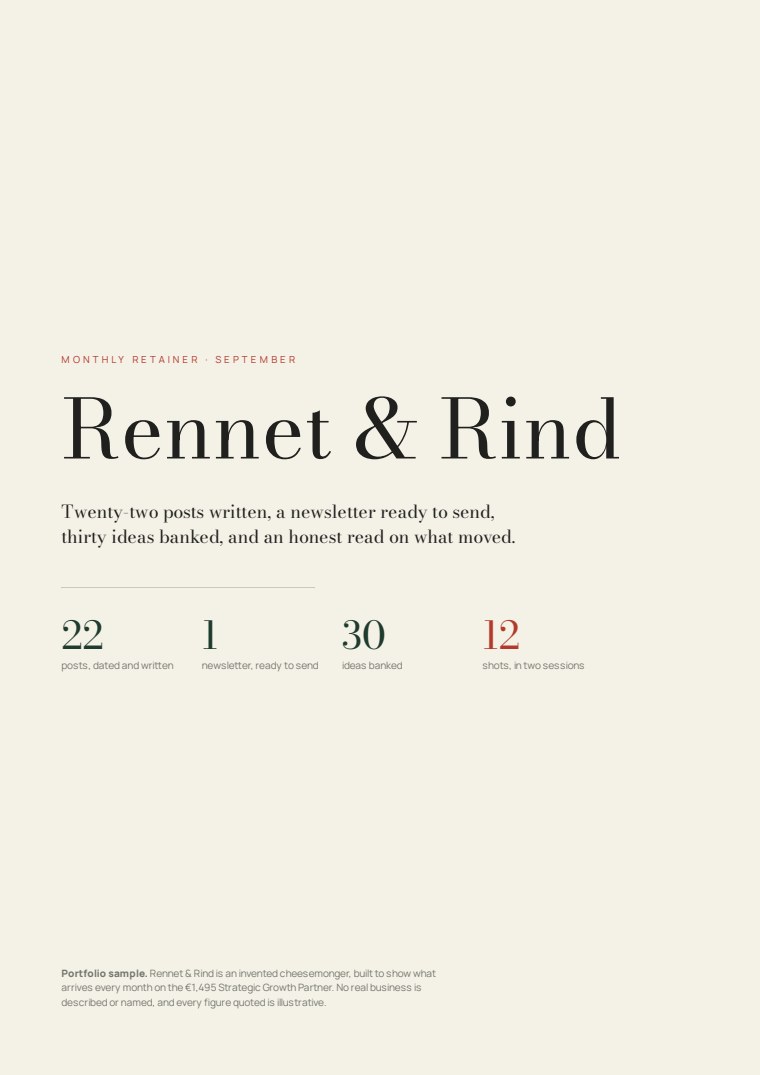
Rennet & Rind
Eleven pages: twenty-two posts dated and written in full, a newsletter ready to send, thirty ideas banked, a twelve-shot list split into two sessions, and an honest read on what moved — including what went down.
Launch
Launch Control: T-30 to +30, built backwards from a date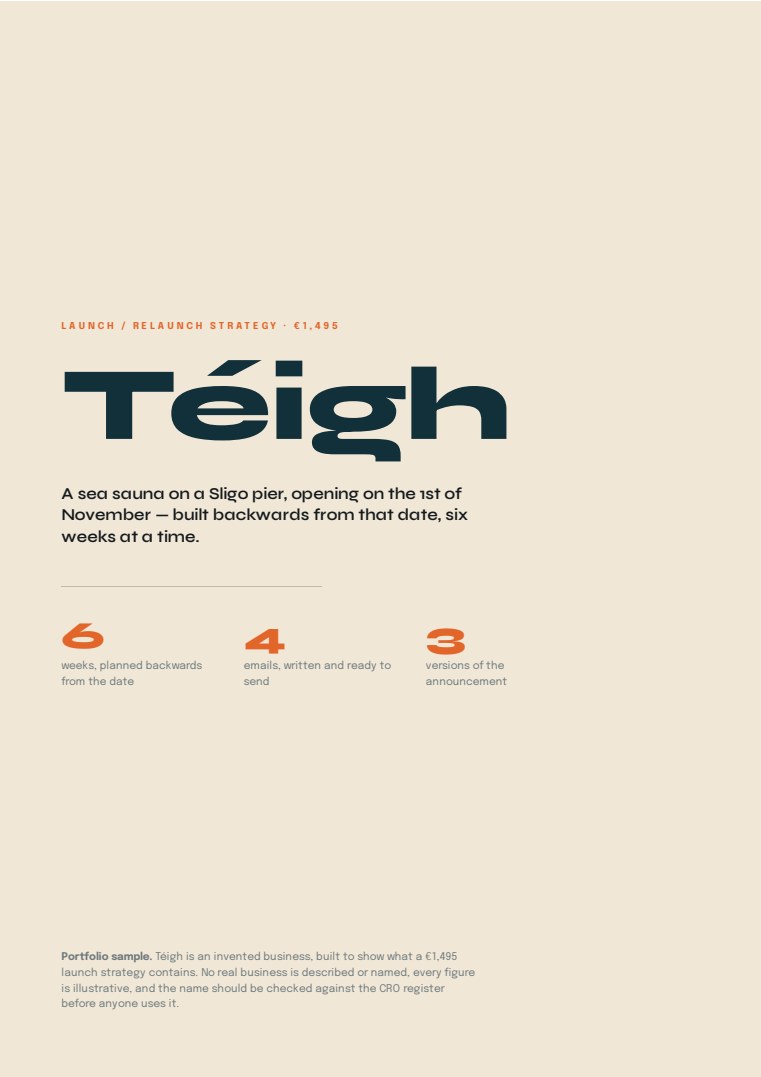
Reset
The one group with nothing to open — and whyThere is no Business Reset sample.
The Business Reset (€4,750) is the newest thing on the card and the biggest, and no invented example exists yet. I'd rather say that than build one and imply it came from a client.
A Reset is made of the documents already on this page, in sequence — the diagnostic, then the offer, then the brand, then the quarter of content, then the launch plan. Open any four of them and you have seen most of what six weeks produces. The part you can't see from here is the order, which is the part that's actually being sold.
The same service, twice
Proof it isn't one template with the names changedFive more samples, all of services already shown above. They're here because the interesting question isn't whether the work is good — it's how far it moves when the business changes.
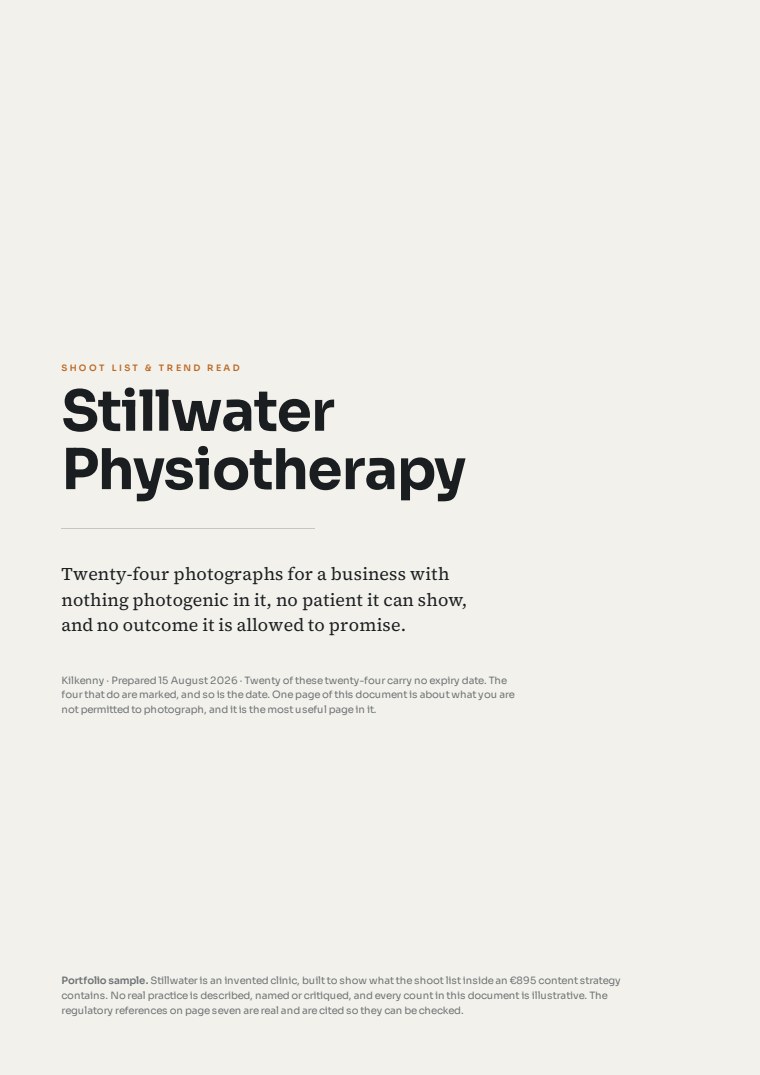
Stillwater Physiotherapy
The same service where there is nothing photogenic in the building, no patient who may appear in a frame, and no outcome anyone is permitted to promise. So it photographs the cause and the return instead — the hurl, the spade, the towpath at six — with a page on what the published codes actually say, quoted rather than guessed at.
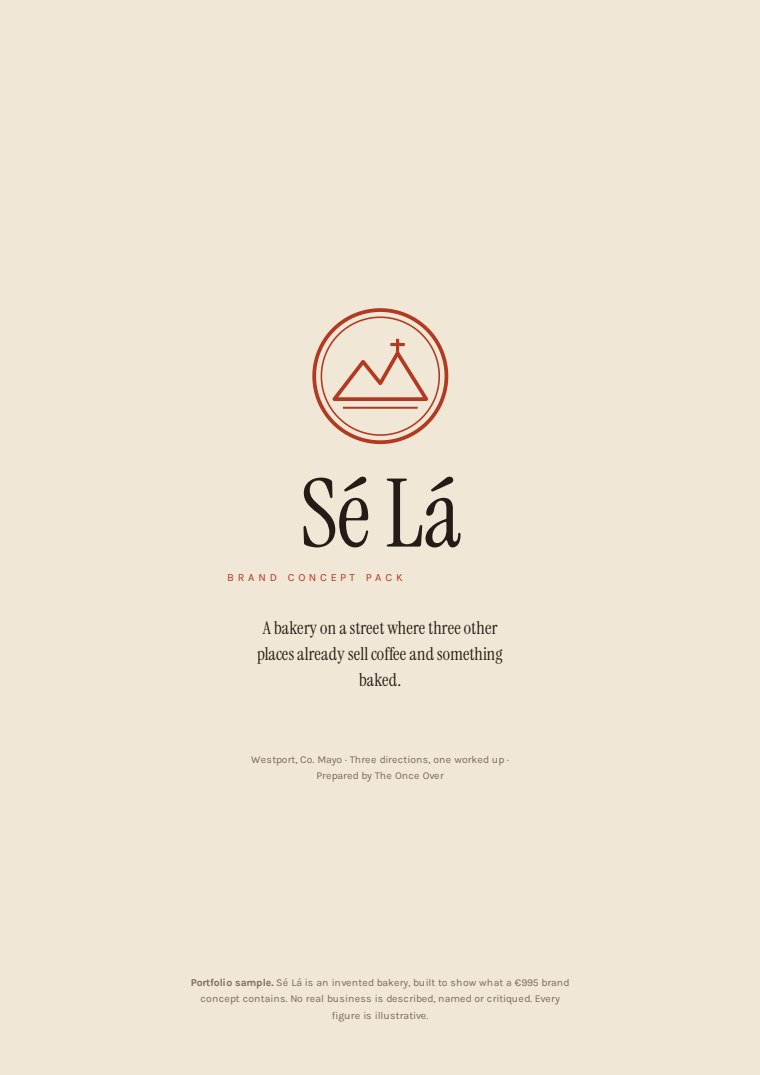
Sé Lá
Nine pages. A bakery on a street where three others sell the same thing. Six carved stamps, one per baking day, each taken from the town — so Thursday is a reason and not a coincidence.
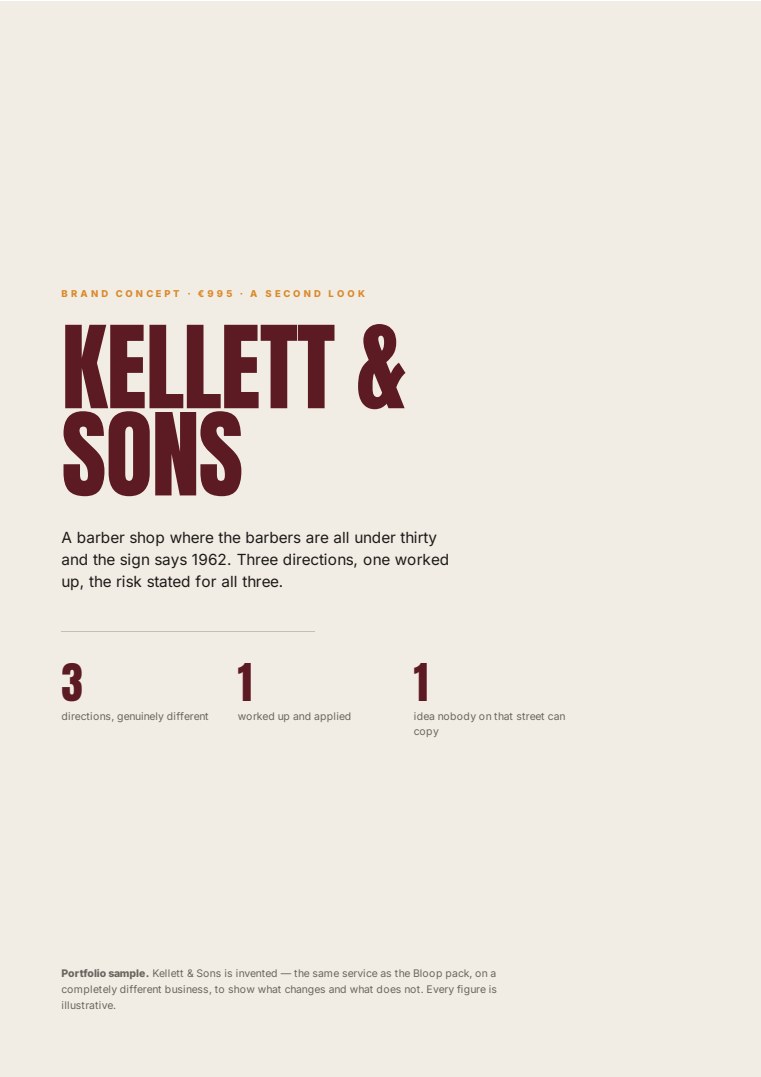
Kellett & Sons
Eight pages. A sixty-three-year-old sign and four barbers under thirty. Three directions, the price list rewritten with times beside every service, and an idea that appreciates while you sleep: the wall of every barber who has ever worked there.
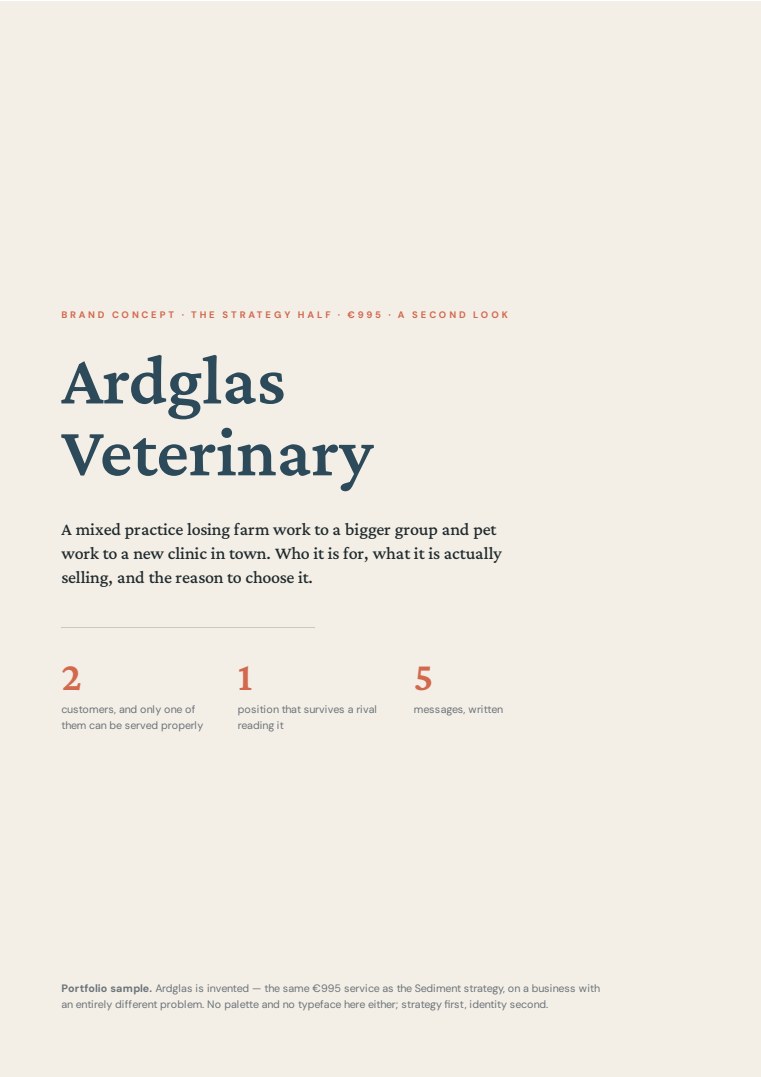
Ardglas Veterinary
Eight pages, no palette and no typeface. A practice losing farm work on price and pet work on convenience, where the answer is to give one of them up. The position tested against whether a corporate group could copy it — and why it structurally cannot.
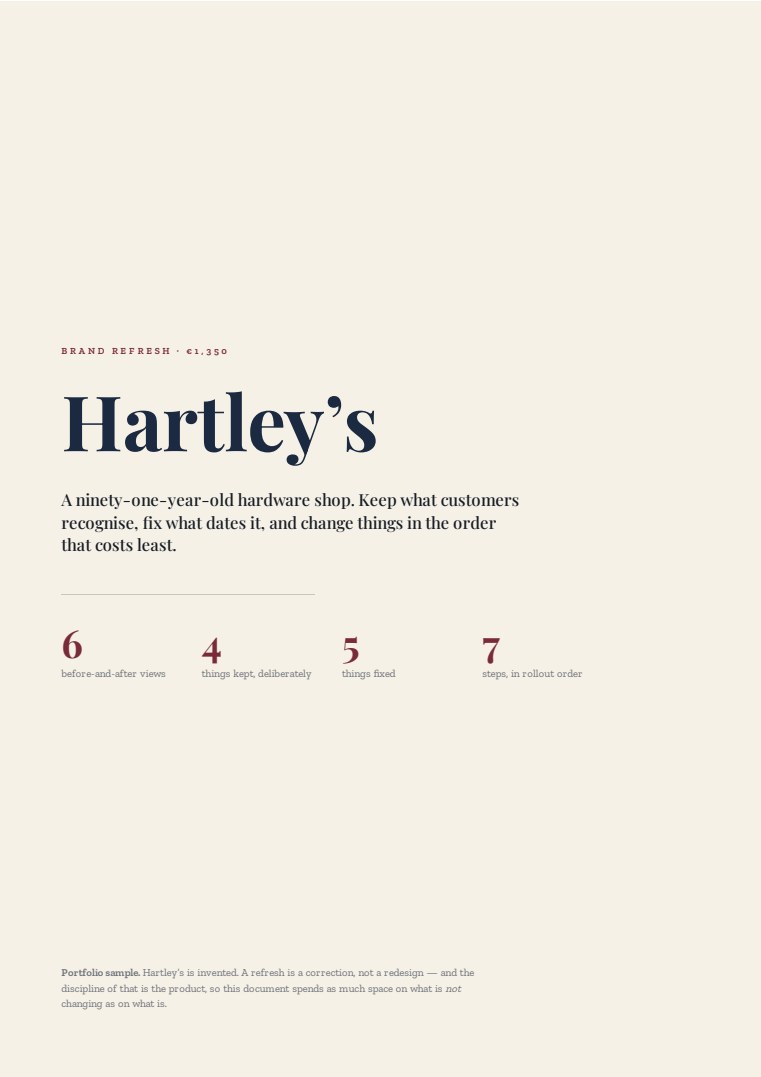
Hartley's
Eight pages. A keep-and-fix split argued rather than asserted, six before-and-after views, every surface listed with what happens to it, and a rollout ordered so the free changes come first and the €1,900 sign comes after the direction is proven.
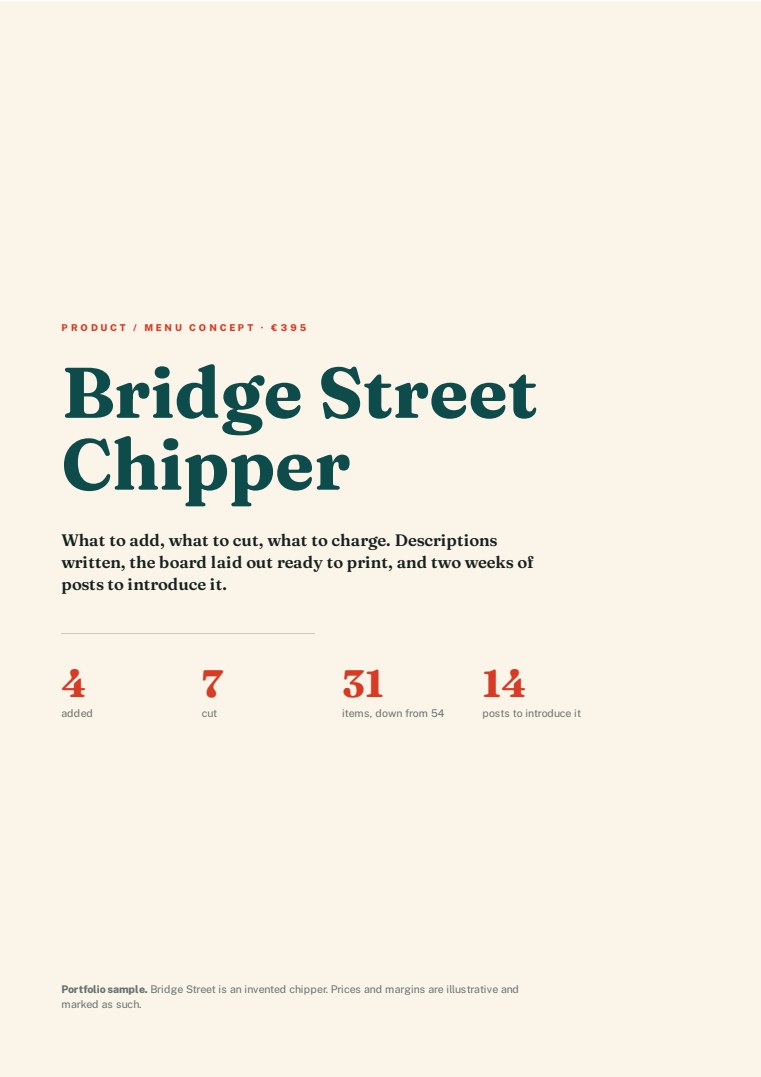
Bridge Street
Eight pages. Fifty-four items cut to thirty-one, four added, eleven prices tested against three takeaways in town, every description rewritten, the board laid out ready to print, and a fortnight of posts that introduces it without announcing anything.
What every one of these had to pass
A document isn't finished until it's been measured.
Nothing above was judged by reading the source. Every page was rendered and checked: A4 throughout, typefaces embedded rather than substituted, no page under about sixty per cent filled, no page with a white band at its foot, and no two words overlapping anywhere. Fourteen of these once shipped with the page background collapsing in print — invisible on screen, and nearly half a sheet of bare white on paper. That's why the check exists.
The other rule you can see at work: documents that diagnose wear my brand, because they're me talking. Documents that propose an identity wear the client's, and carry nothing of mine but a small line down the spine.
Something here look like your problem?
Fifteen minutes on the phone, and you'll have a fixed price in writing the same week. If the real bottleneck turns out to be something I can't help with, I'll say so on that call — free.